In print
Ebook
Audiobook
Library
We may earn a commission. Learn more.
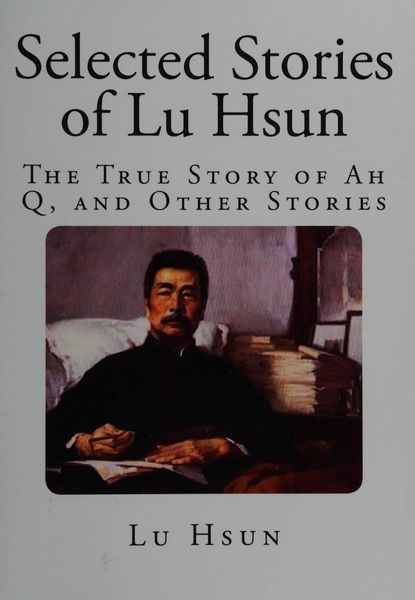
Selected stories of Lu Hsun the true story of Ah Q, and other stories
Lu Hsun, chief commander of China's modern cultural revolution, was not only a great thinker and political commentator but the founder of modern Chinese literature. As early as in the May 1918 issue of the magazine New Youth, Lu Hsun published one of his best stories, A Madman's Diary. This was his "declaration of war" against China's feudal society, and the first short story in the history of modern Chinese literature. Thereafter he followed up with a succession of stories such as The True Story of Ah Q and The New Year's Sacrifice, which cut through and sharply attacked stark reality in the dark old society. These stories were later included in the three volumes Call to Arms, Wandering and Old Tales Retold, and have become treasures in the Chinese people's literary heritage. In his early life Lu Hsun was a revolutionary democrat, who later matured into a communist. His earlier works were mainly stories, 18 of the more important of which, plus the preface to Call to Arms, his first short story collection, have been selected for this book. The stories show clearly his method in this period of creative writing, thoroughgoing critical realism, a method closely related to the outright anti-imperialist and anti-feudal views which he formed in his early days. In his preface to Call to Arms, the author tells his motive in choosing literature as a weapon of struggle. This will give readers a deeper understanding of Lu Hsun's stories.
Selected Stories of Lu Hsun - The True Story of Ah Q is an episodic novella written by Lu Xun, first published as a serial between December 4, 1921 and February 12, 1922. It was later placed in his first short story collection Call to Arms in 1923 and is the longest of the stories in the collection. The piece is generally held to be a masterpiece of modern Chinese literature, since it is considered the first piece of work fully to use Vernacular Chinese after the 1919 May 4th Movement in China. Lu Xun or Lu Hsun (Wade-Giles), was the pen name of Zhou Shuren (September 25, 1881 - October 19, 1936), a leading figure of modern Chinese literature. Writing in Vernacular Chinese as well as Classical Chinese, Lu Xun was a novelist, editor, translator, literary critic, essayist, and poet. In the 1930s he became the titular head of the League of Left-Wing Writers in Shanghai. Lu Xun's works exerted a substantial influence after the May Fourth Movement that began around 1916. He was highly acclaimed by the Communist regime after 1949, and Mao Zedong himself was a lifelong admirer of Lu Xun's works. Though sympathetic to communist ideas, Lu Xun never actually joined the Chinese Communist Party. Like many leaders of the May Fourth Movement, he was primarily a leftist and liberal--Amazon.com.
Reviews
No reviews yet.
Be the first to write one.
Highlights
No highlights yet.
Be the first to share one.