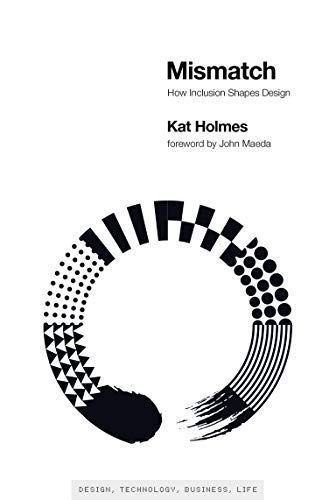
Mismatch How Inclusion Shapes Design
Sometimes designed objects reject their users- a computer mouse that doesn't work for left-handed people, for example, or a touchscreen payment system that only works for people who read English phrases, have 20/20 vision, and use a credit card. Something as simple as color choices can render a product unusable for millions. These mismatches are the building blocks of exclusion. In Mismatch, Kat Holmes describes how design can lead to exclusion, and how design can also remedy exclusion. Inclusive design methods--designing objects with rather than for excluded users--can create elegant solutions that work well and benefit all.

Reviews
Karolina@fox
Rohini Anandamurugan@rohini-anandamurugan
Matt Walker@mwalk
George Penston@gpenston
Karthik@chimpy
Ali Angco@aliangco
Richard Bruskowski@richy
Ana Ferreira@ana
Manik@manik
Chelsea Chong @phngi
Manik@manik
Colin O'Brien@onepointzero
Ahmad Ajmi@ahmadajmi
Adam Wilson@adamwilson
Steve Barnett@maxbarners
Nick Simson@nsmsn
Highlights
Nina @ninimum
Page 129
Claudine@claudrod
Claudine@claudrod
Claudine@claudrod
Claudine@claudrod
Claudine@claudrod
Claudine@claudrod
Claudine@claudrod
Claudine@claudrod
Claudine@claudrod
Claudine@claudrod
Claudine@claudrod
Claudine@claudrod
Claudine@claudrod
Claudine@claudrod
Claudine@claudrod
Claudine@claudrod
Claudine@claudrod
Claudine@claudrod
Claudine@claudrod
Claudine@claudrod
Claudine@claudrod
Claudine@claudrod
Claudine@claudrod